

Placement
Most placement problems are decided before anyone thinks about them, by where the truck can physically stop. Work outward from that and the rest of it falls into place.
Start With The Truck
The placement conversation runs in a fixed order, and this is the top of it.
This is first because it decides everything after it. A unit has to be set down by a truck and pumped out by a truck, and the service truck needs to get within hose reach on every visit, not just the first one.
The spots that catch people out are the ones that are fine in week one. A gate that gets chained after the framing goes up. A back corner that a stockpile grows into. Soft ground after an irrigation set or a winter rain. If the access changes partway through the job, call the yard and we will move it rather than skip the stop.
Yes, and firm as well as level. A unit on a slope does not drain to where it is supposed to, the door swings on its own, and it is unpleasant to stand in. Firm matters as much as flat, because soft ground under one corner puts it out of level a day later.
Compacted dirt, gravel, asphalt and concrete all work. Fresh fill, wet turf and loose sand do not. If the only flat spot is soft, tell us and we will bring something to set it on.
It matters more here than most places. The Valley gets a steady afternoon wind through a lot of the year, and the door is the only opening. Face it away from the prevailing wind and away from where people are eating or seated.
On an event, face the door away from the sightline of the ceremony, the head table or the photographs. It is a small thing to get right on the day and impossible to fix afterwards.
The Spot Decides The Job
The best-looking spot on a site is very often the one the service truck cannot get to. Once a unit is somewhere a hose will not reach, every service visit becomes a negotiation, and the unit ends up moved anyway. Walking the access route first saves that.
On a working site the pad matters as much as the position: firm, level, and out of the way of the part of the job that moves. That is the normal setup for construction restroom rentals, and it is why we ask about gate hours and delivery windows when you order a portable restroom rather than after the truck is dispatched.
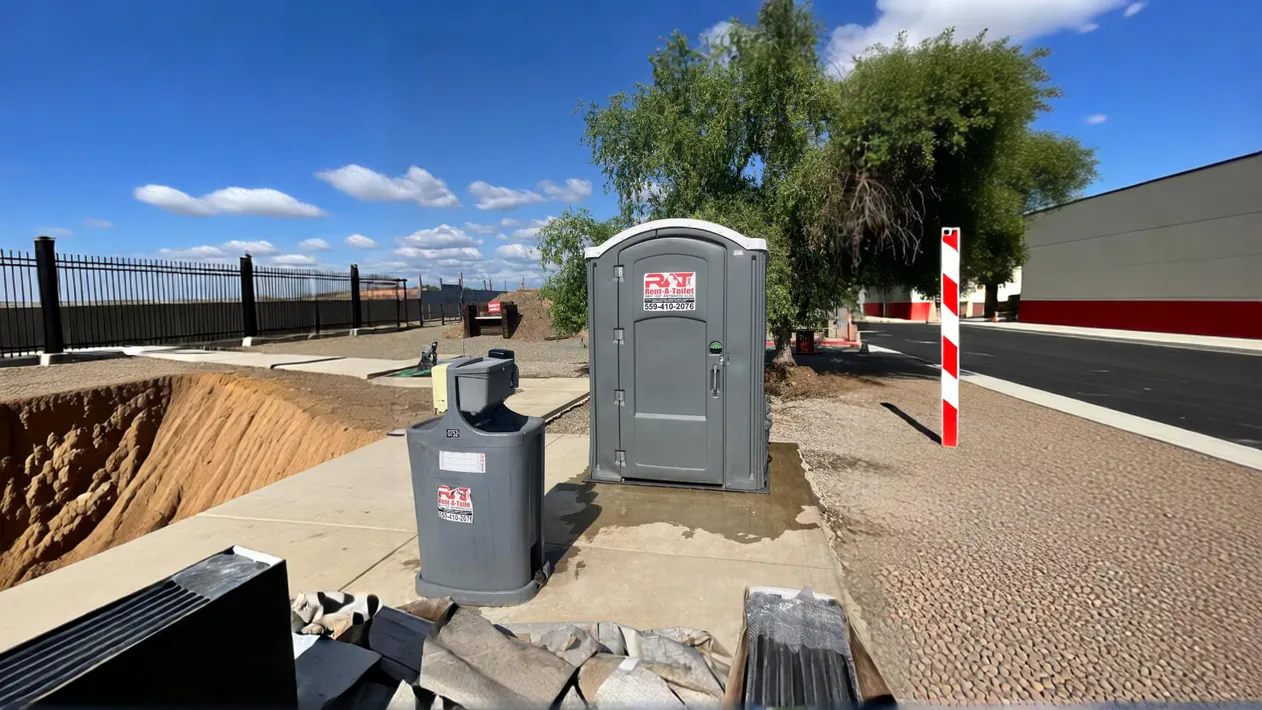 Pad placement beside an open trench
Tell us the site and we will tell you where we would put it.
Distance, Access and Sign-Off
Close enough that people use it, far enough that nobody is eating next to it. On a jobsite that usually means near where the crew actually breaks, not at the far fence, because a unit nobody wants to walk to stops getting used and the problem moves into the treeline.
On an event, out of the main sightline but on an obvious path, with something marking it after dark. A unit people cannot find at nine at night may as well not be there.
How many you need is a separate question from where they go, and it is worth running properly. The unit calculator works it off headcount and hours.
Yes. An accessible unit has to sit on a firm level surface with a firm level path leading to it, connected to the route everyone else is using. Putting it at the end of a gravel run defeats it, and that is the most common way it goes wrong.
Plan its spot first and fit the others around it, rather than the other way round. More on that in ADA units and the ramp question.
On private property, for a normal job or a backyard event, usually not. What you do need is the property owner's say-so and, on a commercial site, whoever runs the site.
It changes once any part of it sits on public ground. A street, a sidewalk, a park or a public right of way is the city or the county's call, and the rules are set locally rather than statewide. Ask the city or county before you book, because the answer decides the spot.
Jobsite requirements are a separate matter and they are not optional. Portable toilet rules on a California jobsite covers what is actually required and by whom.
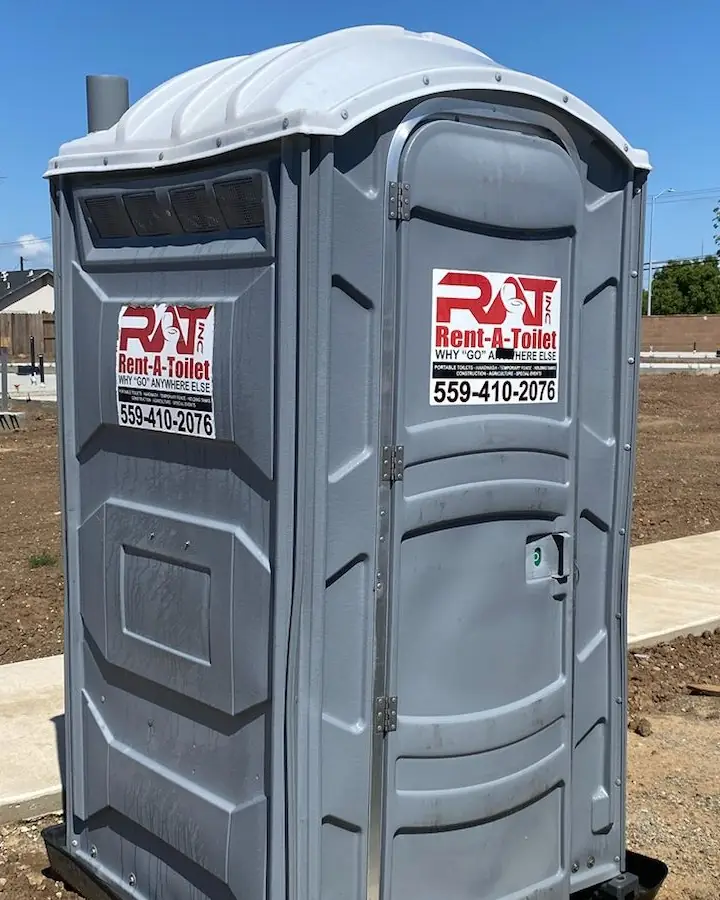
Give us these on the first call and the placement is settled before a truck is loaded.
The accessible route, the indoor version of this question, and the rules.
An accessible unit changes the layout more than it changes the count. The route to it is the hard part.
Whether it fits through the door, what an enclosed space needs for airflow, and how it gets in there.
Who has to provide them, and when an event needs to ask the city first.
Eleven pieces on sizing, placement, servicing, permits and cost.
The city, the site, and where the truck can get to.