

Sizing
There is a rule of thumb going around and it is not wrong so much as incomplete. It counts people and it ignores hours, which is the variable that actually decides whether there is a queue.
Start Here
There is a working tool for this on the site. Use it first, then read the rest.
Three things set it: how many people, how many hours, and whether food and drink are being served. Not one thing.
Run those three on the unit calculator. It works off published sizing tables and it names them on the page, so you can check the working rather than take our word for it. It handles the event side and the jobsite side separately, because they do not size the same way.
Then call and we will firm it up, because there are four things the calculator cannot know about your site. Those are further down.
It is a reasonable starting instinct and it is what most people arrive with. What it misses is time.
The same guest list over four hours and over ten hours is two different jobs, and a crowd where drink is served is a third. A rule that only counts heads will get a short afternoon event roughly right and a long evening one wrong, and it will be wrong in the direction of a queue.
The other thing it misses is peak versus total. The number of guests through the gate across a whole afternoon is not the number standing there at any one moment, and sizing to the wrong one of those two is the most common mistake we see.
The Count On The Ground
The count is only half the job. The other half is whether the row fits where you want it, whether the truck can reach it every service visit, and whether it is still standing where you left it on the last day of the job.
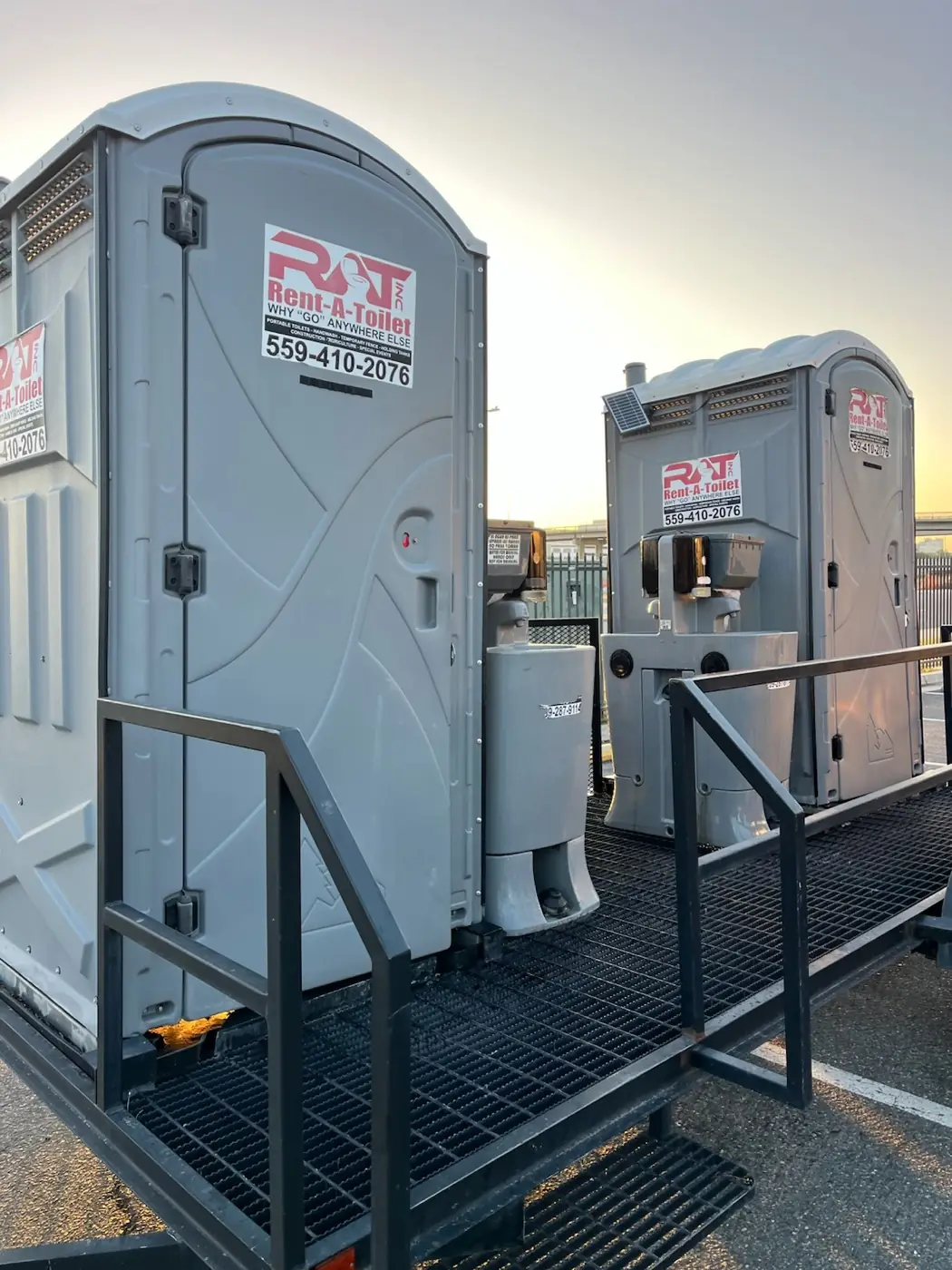
Most of what we deliver is standard portable restrooms with hand-wash stations paired in, because the stations are the line most often left off a count. Get the starting number from the portable toilets calculator, then call the yard and we will walk the rest of it with you.
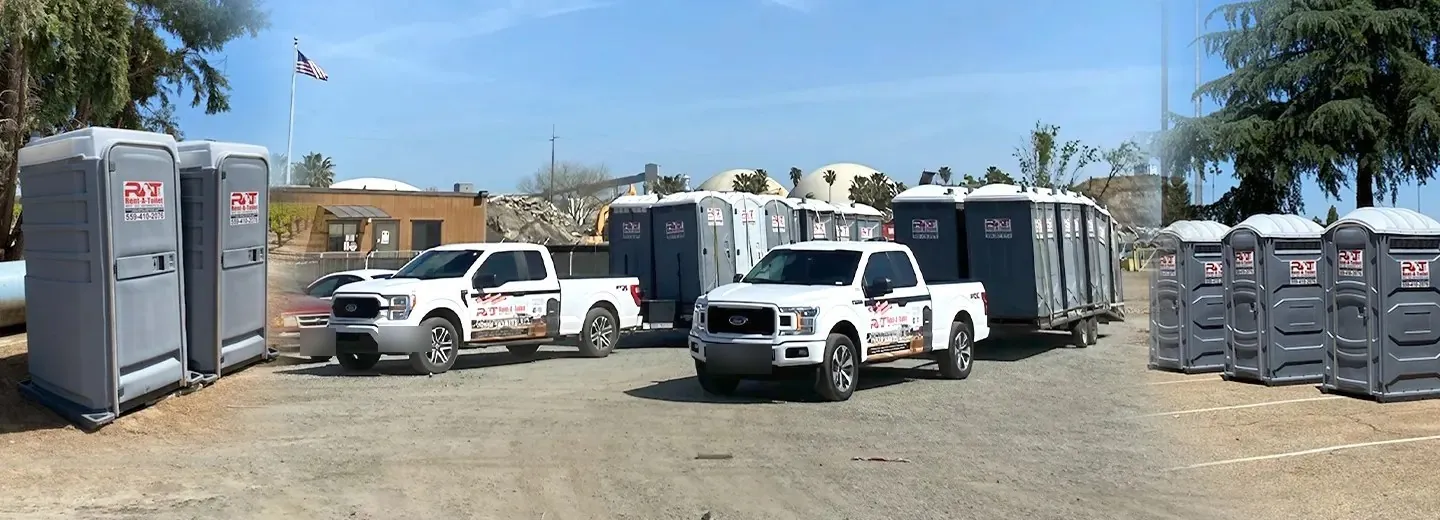 The count comes off the yard, not a table
The calculator gets you close. The call gets you exact.
What Pushes The Count Up
Four things, and three of them are ordinary here.
That last one is worth dwelling on. Somebody sizing an event in California worked it out in public and got it right: the number through the gate across the whole afternoon was roughly double the number actually on site at any one moment. Those are two very different figures and only one of them should be driving the count. If your event has a ceremony, a speech or a race start that empties everyone out at once, size to the peak.
Undersizing shows up as a queue, and a queue at an event is the thing people remember afterwards. Oversizing costs less than people think, because the marginal unit on a delivery that is already happening is the cheapest unit on the quote. The truck is already rolling.
If you are between two numbers, take the higher one. That is the advice we would give you on the phone and there is no reason to make you call for it.
Jobsites Are A Different Calculation
On a jobsite there is a legal floor underneath the comfort question. OSHA's construction sanitation standard sets a minimum by crew size, and California enforces its own version through Cal/OSHA. The calculator runs the federal table and cites it.
Our own working standard runs stricter than the legal floor, because a compliant site and a usable site are not always the same site. When the two disagree we quote the stricter number.
Portable toilet rules on a California jobsite covers which standard applies and who carries the duty.
They are counted separately from the units, and they are the thing most often left off a quote. On a site where food is handled they are not optional.
The calculator pairs them for you. If you would rather just ask, say so on the call and we will put the pairing on the quote.
What A Calculator Cannot Know
Four things, every time.
None of that is in a table. It is why the count on the calculator is a starting number and the one on the quote is the real one.
The tool, the placement question, and the tier the count sometimes changes.
Run headcount, hours and whether drink is served. It works off published sizing tables and names them on the page.
When raising the count is not the answer and changing the unit is. Flushing toilets, sinks, lighting and climate control.
Truck access, level ground, wind and distance. The four things a calculator cannot know about your site.
Eleven pieces on sizing, placement, servicing, permits and cost.
Headcount, hours, and the city. We will spec the count with you.