

Choosing
Most people arrive at this as a choice between two things. It is really a choice between three, and the one in the middle is the one nobody can name, which is why it never gets offered.
Three Tiers, Not Two
This is how buyers describe it to each other, and it is the right way to think about it.
The molded plastic unit you have seen on every jobsite and at every festival. A chemical toilet in a self-contained shell, with paper and hand sanitizer inside. No plumbing, no power, nothing needed from your site beyond somewhere firm and level that the truck can reach.
It is the workhorse. On a construction site it is almost always the right answer, and on a casual outdoor event it is fine if there are enough of them and they are serviced during the day rather than only before it.
Portable restroom rental covers the equipment.
A flushable unit. Same self-contained shell, but with a separate fresh water tank and a foot pump, so the bowl rinses between users instead of filling up in front of the next person.
It still needs nothing from your site. That is the point of it. Somebody put the gap it fills better than we could:
“Is there anything in the middle between the fancy trailers and the regular portapotties? Or did someone find a creative solution?”Wedding forum, posted August 2026
The reason that question keeps getting asked is that the middle rung has no agreed name, so people cannot search for it and yards do not lead with it. Ask for it by description. How flushable units work goes through the mechanism.
A towed unit that reads as an actual bathroom. Flushing toilets, running sinks, mirrors, lights, climate control, a floor you would stand on in good shoes. Buyers mostly call it a bathroom trailer. The industry word is restroom trailer, and they are the same thing.
The trade is that it wants power and water to run. At a venue that has both, that is nothing. At a bare site it means a generator and a water supply, and those are the lines that make trailer quotes look strange to people seeing them for the first time.
Restroom trailer rental for the equipment, and what drives the cost of a bathroom trailer for the quote.
The Two Ends Of The Range
That single sentence is most of the decision. A standard unit can go almost anywhere a truck can reach and needs nothing from you. A trailer needs a tow path, a level place to sit and, in most cases, something to plug into. What you get back for that is a room instead of a box.
Both come off the same yard, so mixing them is not awkward to arrange: a restroom trailer where the guests are and standard portable restrooms where the crew is, is one of the most common orders we take and usually the cheapest way to solve both problems at once.
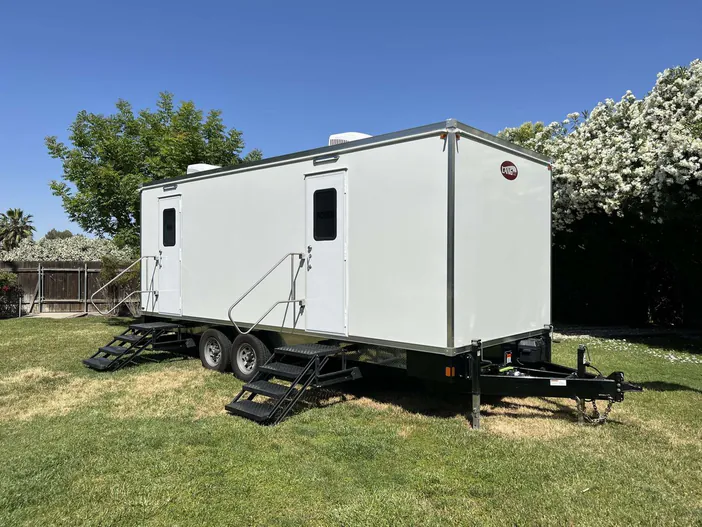 The trailer end of the range
Tell us the site and the headcount and we will say which one we would put there.
How To Actually Decide
This is the fastest way to narrow it, and most people skip it and start from budget instead.
If your site has no power and no water, you have not ruled out a trailer, but you have found the thing that will decide the quote. Settle it before you commit to the venue.
Roughly, and with the honest caveat that the site can override any of it.
Yes, and it is frequently the best answer once people stop treating it as one decision. A trailer where the guests are, standard units back by the parking, the catering tent and the crew.
The money goes where people notice it and the count still works. Tell us the layout and we will quote both halves on one sheet.
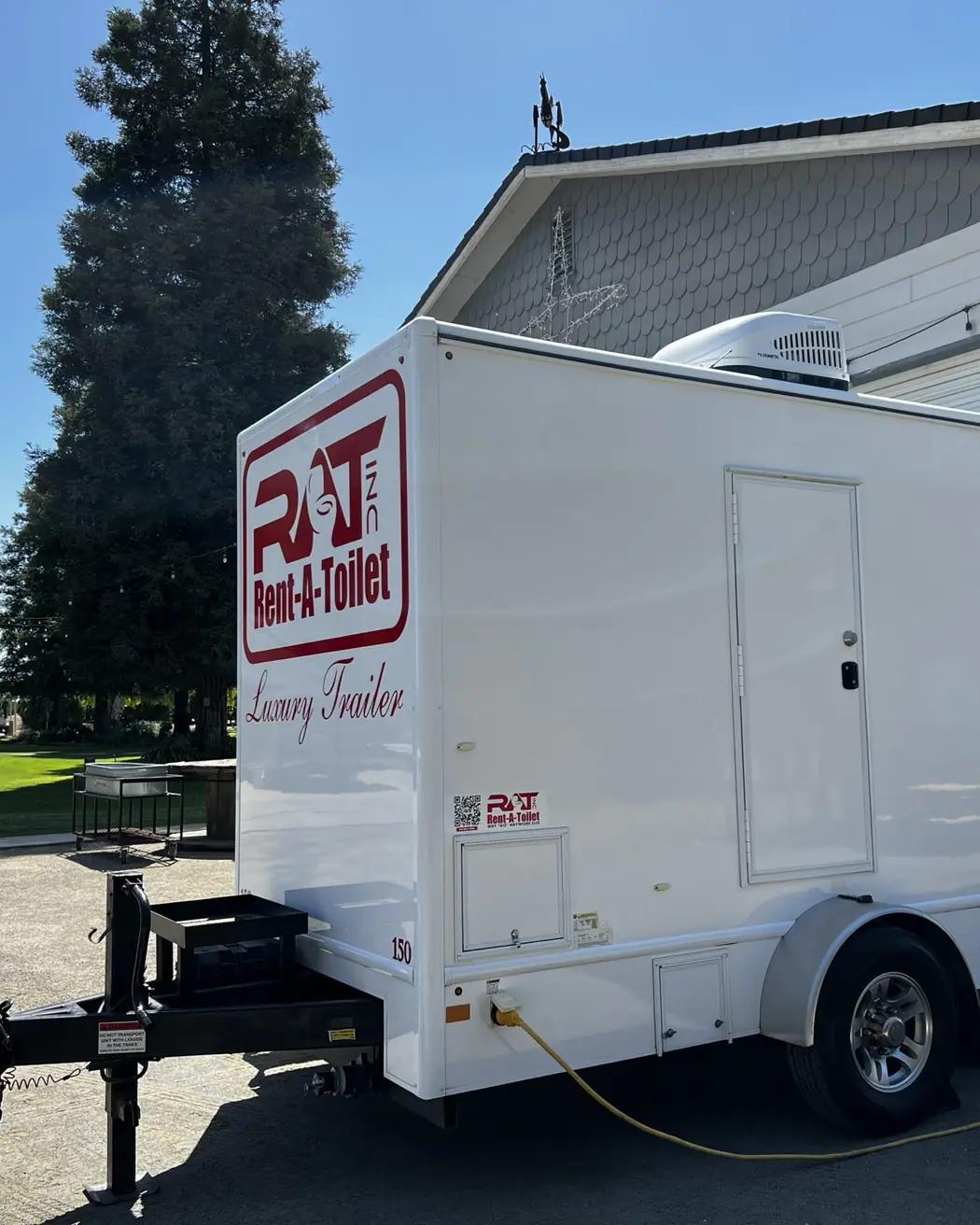
The order is what you would expect. A standard unit is the least, a flushable unit sits above it, and a trailer is a different category with its own site requirements attached.
What is less obvious is that the gap between the tiers is smaller than the gap between a one-day booking and a longer one, because the trips are most of the cost at the short end. That is worth knowing before you downgrade the equipment to save money.
Both cost pages walk through what goes into the number. Porta potty cost and bathroom trailer cost. For the count, the unit calculator.
The rung in the middle, the tow-free option, and the other trailer we run.
The rung between the two. What the flush does, and what it asks of your site.
A standard unit that arrives on its own trailer, for ground you cannot set anything on.
Eleven pieces on sizing, placement, servicing, permits and cost.
The city, the headcount, and whether there is power and water on site.