

The Middle Tier
A flushable unit sits between a standard porta potty and a bathroom trailer. Here is what is inside one, what the flush is actually doing, and when the difference is worth paying for on a Central Valley job or event.
How It Works
Three questions about the machine itself, before anything about price or booking.
Four things. A bowl, a fresh water tank, a holding tank underneath, and a pump you work with a foot pedal or a hand lever. The fresh water tank and the holding tank are separate. That separation is the whole difference between this and a standard unit, where there is one tank and nothing rinses.
The holding tank carries a charge of deodorizer that breaks down solids and holds the smell down between service visits. It is the same chemistry a standard unit uses. There is just more water sitting on top of it.
You work the pedal, and it draws clean water out of the fresh tank and pushes it around the bowl. The bowl rinses, the contents drop into the holding tank below, and the bowl closes back up. It is a rinse, not a sewer connection. Nothing leaves the unit until the truck comes.
The practical effect is that the second person to use it does not walk into what the first person left. On a long event that is most of what people are reacting to when they say a unit is clean or is not.
No. It carries its own water and it does not plug into anything. That is the reason it exists. A bathroom trailer wants a power source and a water source, and on a ranch, an orchard block, or a campground that is either a generator and a tank or it is a problem. A flushable unit turns up ready.
All it needs is somewhere reasonably level that our truck can get to. If you are setting up somewhere the truck cannot reach, say so on the call, because that changes what we bring rather than whether we can do it.
Where It Sits
The flushable unit exists because there is a real gap between a standard unit and a trailer. It looks and loads like a standard unit, and it asks almost nothing of your site, which is the part people miss when they compare it to a trailer.
If the reason you are asking is guest experience rather than fixtures, read the honest comparison before you book: a restroom trailer solves a different set of problems than a standard portable restroom does, and the middle rung solves neither set completely.
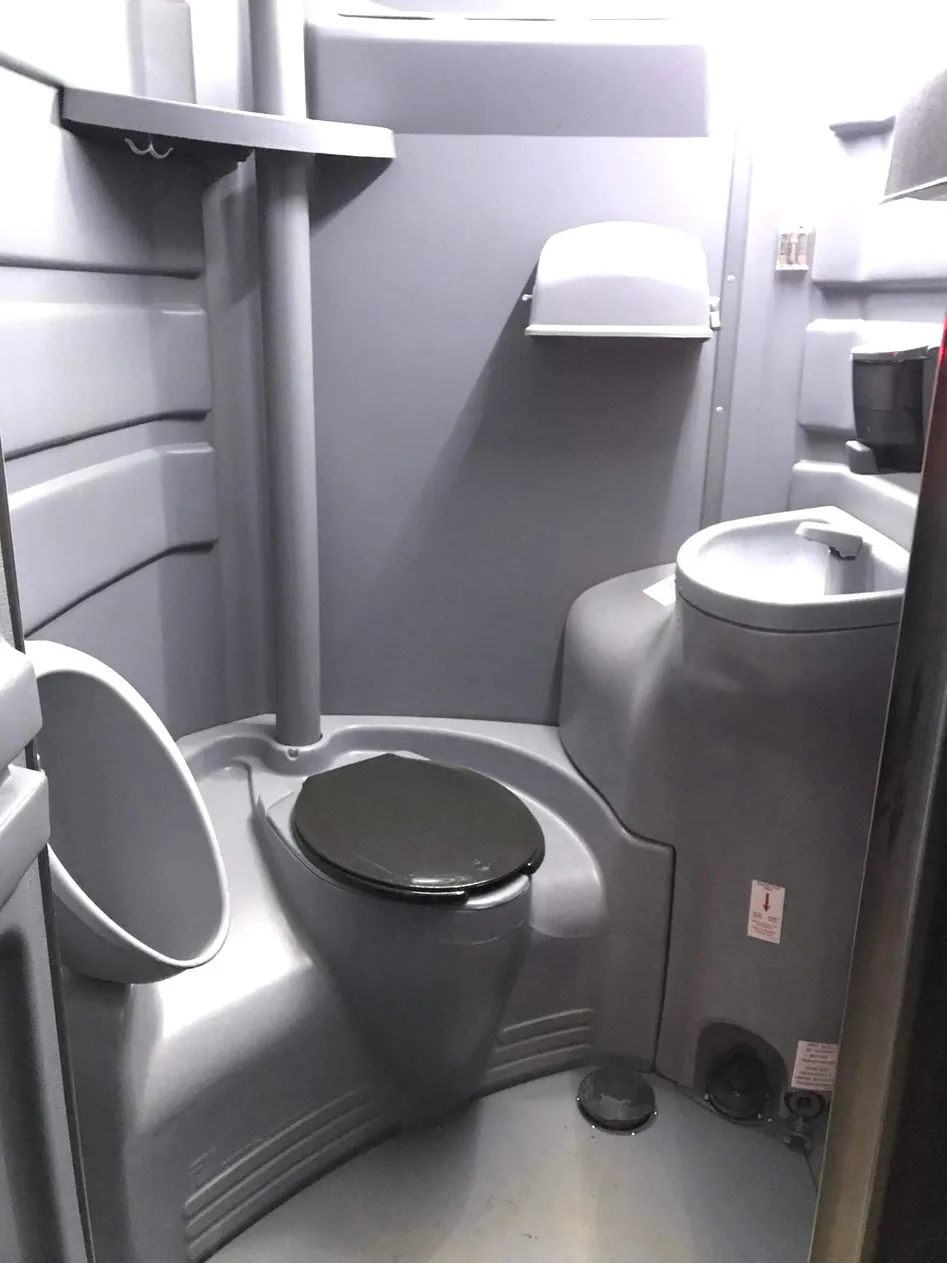 Inside a standard unit
Tell us the headcount and the site, and we will say which one we would put there.
Service and Honesty
A flushable unit runs down two tanks at once, the fresh one empties and the holding one fills, so it is on a tighter schedule than a standard unit doing the same work. On the service visit the holding tank is pumped out to the truck, the bowl and the inside surfaces get washed down, the fresh tank is refilled, and paper and sanitizer go back in.
The interval is set when you book, off headcount and hours, not off a default. Ask for it in writing on the quote, along with whether the drop-off counts as the first visit. That is the term arguments start over.
Sometimes, and it is worth saying so.
“I’ve used the flushable ones before and they are not much different from the regular ones, and still smell.”Wedding forum, posted 2022
What that usually means is a unit that was worked harder than its service schedule was built for, or one that spent a July afternoon in full sun on the Valley floor with the door facing the crowd. The tier of unit is a smaller factor than the interval it is on and where it is standing. A flushable unit on the wrong schedule will lose to a standard unit on the right one.
So the useful question to ask any yard, ours included, is not which model it is. It is how many service visits the rental carries and which day they land.
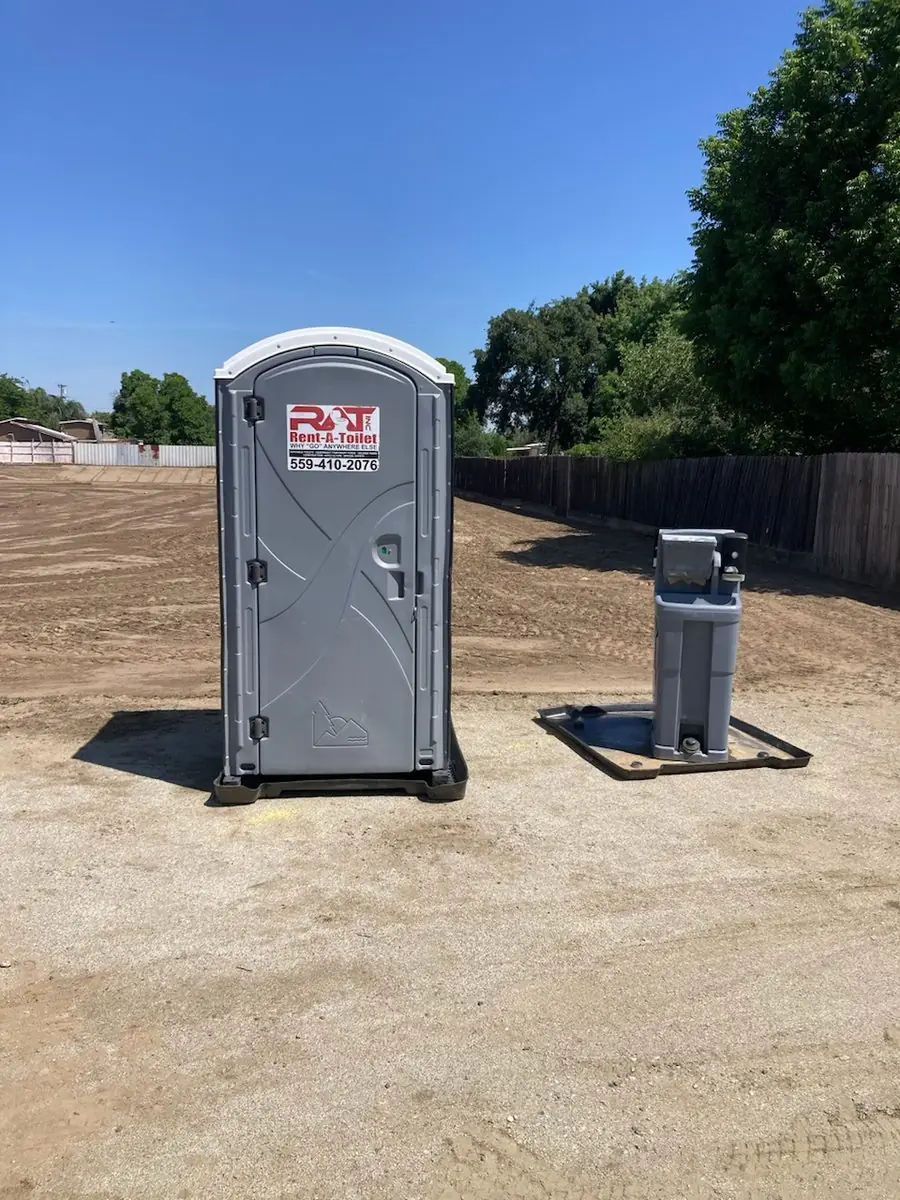
Where It Sits
Buyers tend to sort this into three tiers on their own, and they are right to.
The way people describe it to each other is a ladder of three. A standard unit, which needs nothing from your site and handles a crew or a crowd. A flushable unit, which rinses and holds more water. And a bathroom trailer, which has flushing toilets, running sinks, lights and climate control, and wants power and water to run.
The middle one is the one nobody can name, which is why people assume the choice is only between the blue box and the trailer at the top of the range. It is not.
If it is a jobsite, start at portable restrooms. If it is a wedding or a company event where people are dressed up, look at restroom trailers and then ask us what the middle rung costs before you commit to either end. For the count, run it on the unit calculator and we will firm it up on the call.
The tier question in full, and what happens after the unit is on the ground.
Three tiers, not two. What each needs from your site, and why mixing two of them is often right.
A unit that arrives on its own trailer, for sites where nothing can be set on the ground.
The service visit start to finish, and where the waste goes after the truck pulls away.
Eleven pieces on sizing, placement, servicing, permits and cost.
Headcount, dates, and the city. That is enough to get you a number.